Why Static Control Matters in Advanced Display Manufacturing Environments
Advanced display fabs operate at the cutting edge of technology, where millions of microscopic OLED pixels, MicroLED dies, or quantum dot layers must be placed and coated with submicron precision. In these ultra-clean environments, even a small static charge or stray particle can create visible defects like mura, dead pixels, or color shifts that compromise yield and reliability. Traditional cleanroom measures are not enough—electrostatic discharge (ESD) and electrostatic attraction (ESA) silently pull contaminants into critical layers, damage sensitive backplanes, and shorten product lifespan. Effective static control is therefore not optional—it is fundamental to protecting quality, reducing costly rework, and enabling next-generation displays to meet the industry’s performance and longevity expectations.
 |
|
 |
|
 |
|
 |
|
 |
PARTICLE
CONTAMINATION
Even in cleanrooms, embedded debris creates long-term failures like OLED burn-in or reduced lifetime
|
|
COMPLIANCE &
SAFETY ISSUES
Ongoing monitoring and control are essential to meet ESD and cleanroom standards
|
|
FLEXIBLE & ROLL-TO-ROLL PROCESSES
Bendable substrates in high-speed lines require stable charge neutralization to prevent defects
|
|
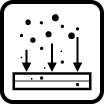
ELECTROSTATIC ATTRACTION
Charges pull submicron contaminants into coatings, causing mura, black spots, and brightness inconsistencies
|
|
ELECTROSTATIC DISCHARGE
Even <100V can cause dead pixels, damage OLED emissive layers, or misalign MicroLED dies
|